Ski on a New Hip

Almost five years after my hip replacement, I am enjoying a good ski season.

My wife and I skied about four miles of cross-country trails this morning. My replaced hip was totally fine. No pain and no stiffness. I couldn’t be happier with it. (The other hip may need surgery, but so far presents only occasional and minor discomfort.)

I tried skijoring with my border collie, Nell, pulling me with a long, elastic lead rope. That was no more than a token success, as Nell hasn’t figured out when to pull and when to come back and lick my face.

In the past month I’ve had three days of downhill skiing at Okemo and Killington. I tried to avoid the moguls on expert slopes, having been warned by my surgeon not to ski bumps. At 75 years of age, I like skiing the groomers. But when there’s soft, new snow, mogul runs are fair game.

Next week, Toni and I are off to Steamboat and Aspen. Pray for snow!

So if you’re a skier and are worried about how hip replacement will affect your snow sports, my advice is stop worrying. My enjoyment of skiing is undiminished.

–Rob Taylor

Scaling MacKenzie

My Appalachian Trail partner Dick Simons asked how my new hip was doing. I replied, “that’s my good hip.”

We were off to climb Mt. MacKenzie, one of six in the Saranac Lake region of the Adirondaks. Dick had done five of them, and MacKenzie was said to be the toughest.

We set off about 9 a.m. on a warm day with Dick’s wife, Pam, my wife Toni, and Bo, Dick’s Corgi. After an hour-long hike into the base of the mountain, the pitch steepened. For a second hour we pushed up through a dirt track liberally punctuated with rocks and roots. At some point we realized we’d wandered off the main trail, as had eight or ten other hikers who overtook us. Dick’s GPS device estimated the main route was 50 yards to our right, where he found it. Shortly the dirt hardened to slabs of rock that required more careful climbing and occasional boosts to get the Corgi up the rocks.

By noon we seemed to be approaching the top, but it was a mirage. We climbed on and again the peak appeared, but proved illusory. On the third false peak, we sat down and ate lunch. We could see the final, and highest, peak ahead, but it required us to descend a steep slope and climb more. We were reluctant.

I was beat, and voted to return the way we came, but Dick persuaded us that once we reached the top, we could continue on and descend the far side on an easier slope. White-haired, overweight hikers passed us, sealing the deal. We went on–to find ourselves descending an even steeper rock face, then climbing again.

Fortunately, Dick was right. After we summited, we found our way down the far side with few rock faces and a gentler slope. My “good” hip never complained, and the other, which may need replacement some day, didn’t either.

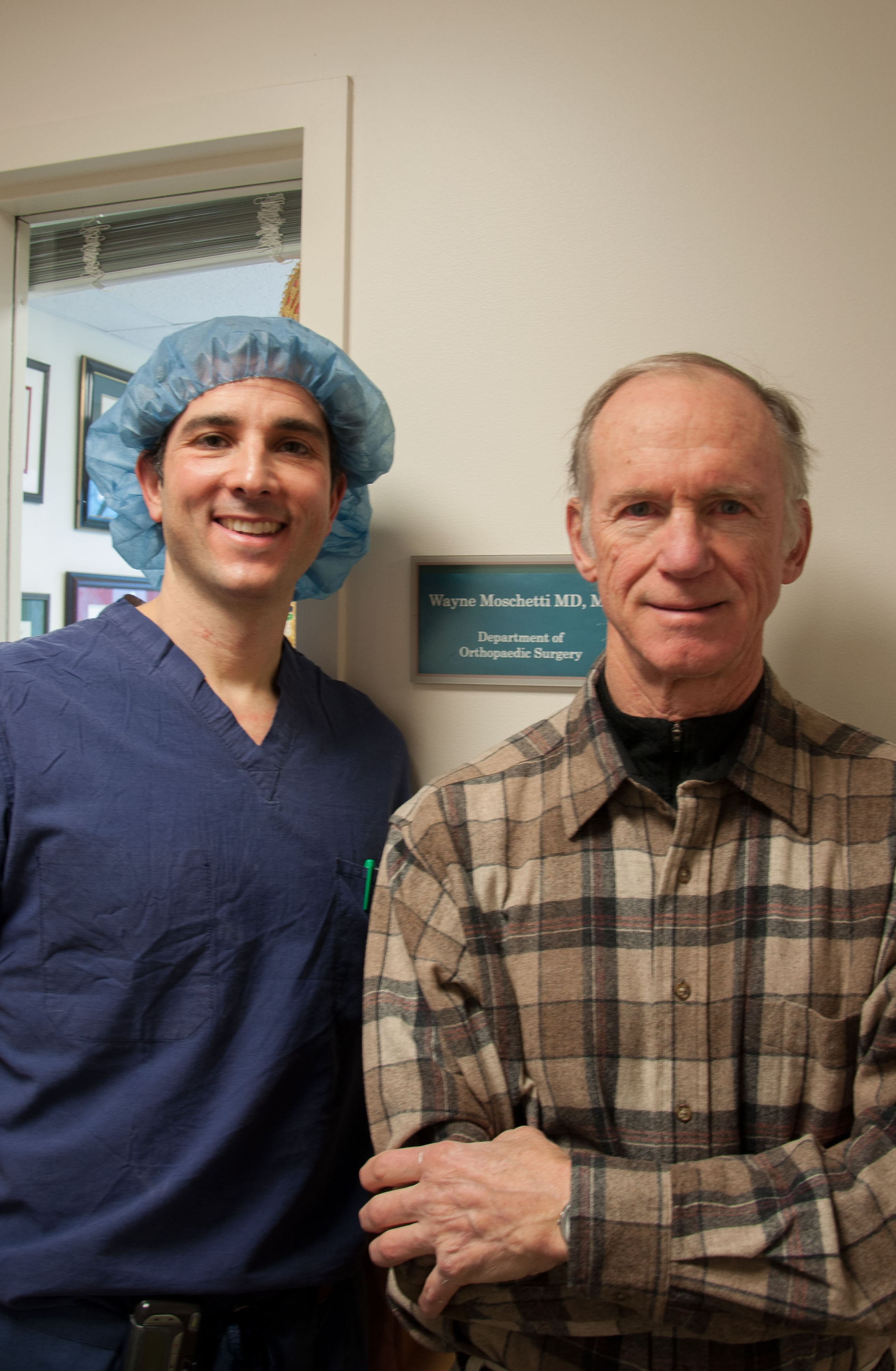
Thank you Dr. Moschetti.

Get Hip! Supports Surgical Foreign Aid

Get Hip! has made a contribution to help provide joint replacement care to those suffering from severe arthritis in developing countries.

Frog’s Leap, publisher of Get Hip, made a donation to Operation Walk, Los Angeles.

Since launching in 1996, Operation Walk has performed free knee and hip replacement surgeries for some 17,000 residents of less developed countries. In 2020, it plans to send volunteer teams to perform surgeries in Guatemala and Nicaragua.

When they published “Get Hip! How to Prepare for and Recover from Total Hip Replacement” the book’s authors committed 25 percent of profits to orthopedic charity. In 2019, the book produced its first profits to fund that commitment.

“I like Operation Walk because it has a strong track record of doing joint repairs and surgical training,” said Rob Taylor, prime author of Get Hip! “And I am pleased that it is targeting countries in Latin America where those services are badly needed.”

“Joint replacement surgery can be life changing for those debilitated by arthritis and Op Walk has a proven track record of delivering care to those in need” said Dr. Wayne Moschetti, surgeon and co-author of Get Hip!.


Surgery Scar Fades

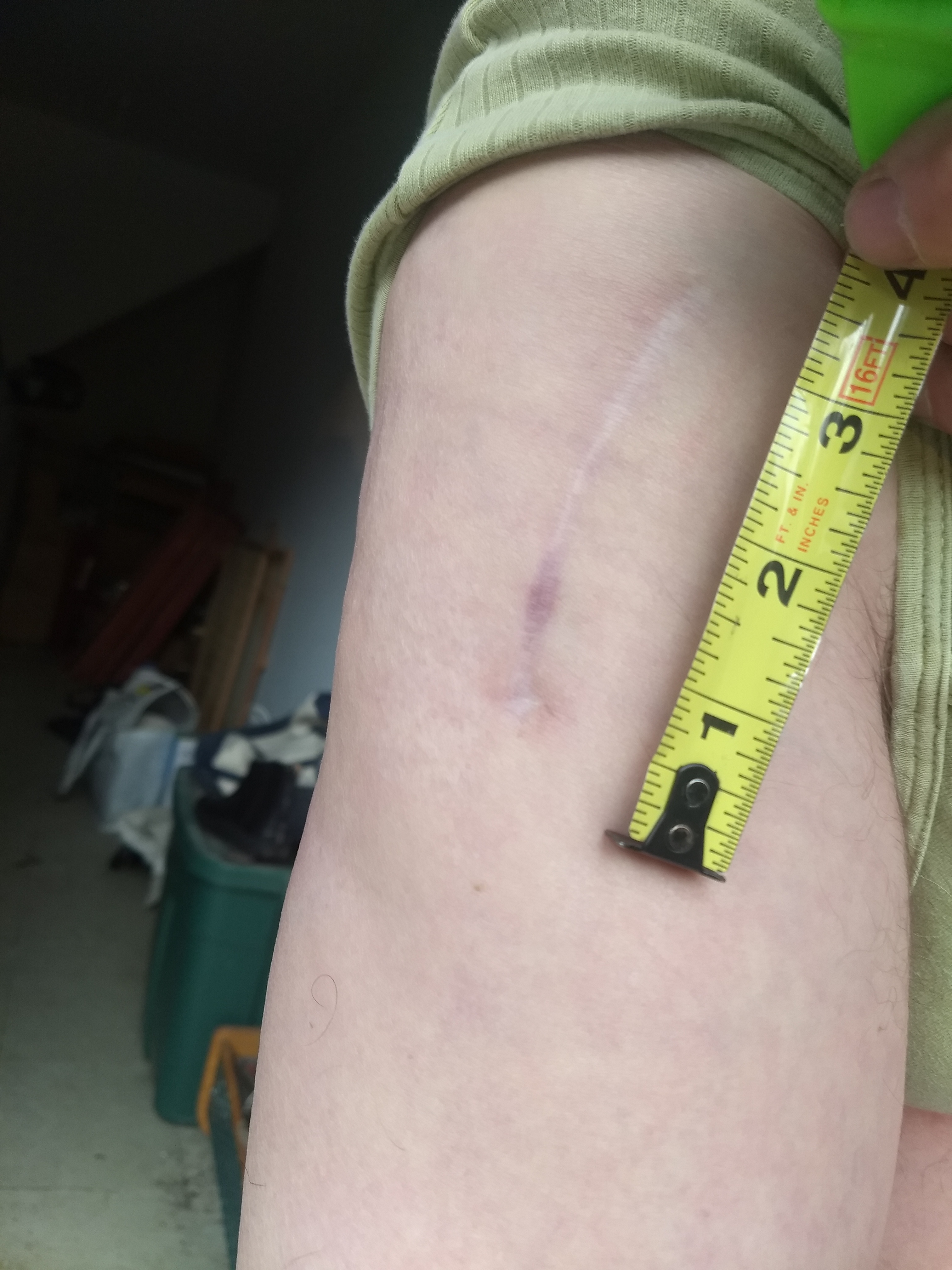
Scar-7-19Some hip replacement patients worry that they’ll be left with a big, ugly scar. I bring good news. I wasn’t.

I hadn’t worried about the scar. My physician told me it would be small; he was doing the anterior procedure that works through a relatively small incision.  Besides, I don’t spend much time on a beach and don’t wear bikini bathing suits.

That said, after the operation I was surprised to see how small the scar was. I measured it and came up with a length of about 3 ¾ inches. I am still amazed that my orthopaedist could have carved out the old and installed new parts through such a small window.

My new hip had its second anniversary last month, so I checked out the scar. Only the bottom inch and a half or so remains darker than the skin around it. The rest has all but disappeared.


My Anniversary

This is my titanium anniversary.

Two years ago today I got a total hip replacement. I couldn’t be happier.

I’m posting this because I frequently see complaints and worries about hip replacements, mostly from people about to undergo the procedure. Of course, this is major surgery and that makes anyone nervous. But in the hands of a skilled surgeon, it works out well most of the time. It sure did for me.

I was walking pretty well in a few days, driving my car in the third week, and playing golf in the fifth week after surgery. At two months, I hiked 7.8 miles up to and back from a summit with a 3,300-ft. altitude gain and loss. And at about 10 months I did a 48-mile W-trek around the Torres del Paine National Park in Patagonia.

Last summer, I resumed riding in an annual local biking event: 100 miles to benefit the Norris Cotton Cancer Center at Dartmouth-Hitchcock Hospital. (I confess missing it in 2017, when my hip was only six weeks out of the operating room.)

I don’t take opioids. I seldom take anti-inflammatories or pain meds, but I’m convinced they should provide most people all the post-operative pain treatment they need.

My recovery has been better than expected. I did a little skiing in the first winter after surgery, but was cautious; my doctor told me now to run or ski bumps, and I tried to comply. But last winter, I violated the second part of the order. I found myself skiing in fresh powder with friends or my sons, and couldn’t resist. I skied bumps, which were softened by the powder, and it felt great!

I want hip replacement patients to know that there’s lots to be gained from the operation. I was having trouble walking when I limped into the hospital for my procedure. I was immediately better for it.

If you want a memoir of my recovery, and that of 11 other patients who have mostly good results, you can get it from my book: “Get Hip! How to Prepare for and Recover from Total Hip Replacement”, which is available from Amazon and major book sellers. See it on my Web site: www.gethip.info

or go directly to Amazon.

Good luck with your hips.

Rob

Doctor’s Orders? Not on a Powder Day!

The best news about total hip replacements is they work.

Mine does, anyway.

The other day I went skiing with some friends after about 10 inches of new snow had fallen. This was in New England, known for ice and rock skiing; not known for powder skiing, but that’s what we got this week.

My doctor told me to avoid skiing bumps. But I love to ski. On a powder day, all bets are off!

My buddies headed down the steepest slopes they could find. I hesitated, said what the hell. I followed. And again, and again…

The untracked powder was chopped up within the first couple of hours, but the snow was deep enough, and the base was not so icy, so that we could find soft snow almost anywhere we went.

I had planned on keeping to the cruising, groomer runs, but all that fresh stuff was irresistible. I did show one iota of good sense. When my buddies went into the trees, I said no. I’ll stick to trails (most of the time, anyway). The fresh snow kept the footing soft, so I figure it wasn’t putting heavy pounding on my hip joint.

One of the guys skiing with me had had one of his hips resurfaced. He reported no problems with it. As for my hip, I never felt so much as a twinge. Thank you Dr. Moschetti!

Rob Taylor

Author of: “Get Hip! How to Prepare for and Recover from Total Hip Replacement”

see: http://www.gethip.info


Manage Pain without Opioids

Chapter 13 of Get Hip! deals with managing pain. I have seen questions about pain management on Twitter, so I’m sending this to reach more hip replacement patients.

–Rob


Before my surgery, I decided I would use as little anesthesia and narcotic pain medication as possible. I figured my threshold for tolerating pain was pretty high, and opioid abuse was then ravaging my home state of New Hampshire, leaving a trail of overdose deaths, neglected kids and infants born with addiction. Nationally, opioid overdose deaths had tripled in 15 years. I didn’t want to join that crowd.

The one Tramadol pill I took my first night home was the last I ever took. My pain level was low, and when I did have some, non-narcotic Tylenol and Naproxen seemed to deal with it.

The hospital had sent me home with 71 tablets of Tramadol, with instructions to take one every four hours, as needed. So I had 70 tablets left over, which seemed like a deplorable waste. More important, it seemed like an invitation to abuse narcotics. 

Moschetti told me that the hospital had given me the amount that an average hip or knee replacement patient had required in the past. He maintained that I was very unusual in taking only a single pain pill. Tramadol was the weakest narcotic they prescribed, he said, and I was assigned a low dose rate. That suggested that most patients used much more Tramadol or more-potent narcotics like Oxycodone or Dilaudid.

My interviews didn’t suggest I was all that unusual. Almost all the hip replacement patients I interviewed said they took their narcotics for only a day or two.

To be sure, pain is tough to pin down. Lacking any objective pain yardstick, Moschetti noted, doctors rely on patients’ evaluations of how much pain they feel and how much narcotic they need to alleviate it. And since drugs work differently on different people, predicting a drug’s effectiveness and needed dose is doubly hard.

Opioid drug makers have spent freely to convince doctors that their pills are relatively safe and non-addictive. Some currently face lawsuits claiming they made false and misleading statements.

Frankly, physician convenience and past attitudes may encourage over-prescription. It’s easier for doctors to prescribe more pills at one time than to deal with repeated patient requests for more. Doctors also want to get good patient-satisfaction scores, which may affect their compensation. “Overprescribing drugs improves patient satisfaction, but does not improve health,” said Brian Sites, my anesthesiologist.

Ten years ago, physicians were criticized for failing to help people relieve pain, which some considered the “5th vital sign.”  Some said patients should have no pain, even with surgery.  This attitude may have contributed to the current opioid epidemic, but it is changing. 

Other conditions may have a bearing on sensitivity to pain or vulnerability to addiction. One study co-authored by Dr. Sites disclosed that individuals with mental disorders used opioids at more than triple the rate of other Americans. The study concluded, “Improving pain management among this population is critical to reduce national dependency on opioids.” 27 

Avoiding Dependence

One study found narcotic dependence in 15 to 26 percent of patients who got opioids. Spurred by such findings, the American medical world is looking more skeptically at whether patients need narcotics.28  A recent study of emergency departments found no significant difference between the short-term pain relief provided by opioids and non-opioid analgesics like ibuprofen (Advil) and acetaminophen (Tylenol).29  With addiction, as with disease, prevention is easier than treatment. A Journal of the American Medical Association editorial said that substituting non-opioid treatments for pain may prove to be an important step toward reducing opioid addiction.30  

At DHMC, pain management experts from the anesthesiology department working with the orthopedic surgery department have created a comprehensive approach that offers multiple options for pain management in addition to opioids.

Guideline Fourteen: Try to Get by With Minimal Narcotics

I did. So did most of the patients I interviewed. Icing the hip and taking non-steroidal anti-inflammatories can often relieve pain and don’t constipate you, as do narcotics. Medicine is moving fast toward using opioids less frequently than in the past, which may reduce addiction.
Prouty Ride

I made it.

I completed the Prouty century bike ride, my first with the new hip. As in past years, it wasn’t all that hard, it just took a long time. And as I expected, my replaced hip was never in pain. Thank you, Dr. Moschetti.

I don’t claim any special merit for doing this. Many hundreds of others did it, of a wide range of ages, and many of them went longer and faster than me and my carbon-fiber bike.

I was relieved that my average speed of 14.4 mph was better than I typically did in recent training. Not as good as in the past. I’m slowing, but the decline is not dramatic.

I have had to get used to getting passed by more people—not just fit young men, but some chubby riders and lots of women. My neighbor Heide went past me as if I were double-parked; but that’s no surprise. She’s 6 ft. 2 ins., lean, and until recently a U.S. national team crew stroke. The only passers I took hard were the white-haired women. One silver mane was on the second hundred-mile day of her “ultimate” ride. We chatted about my “crash-test-dummy jersey,” and a few minutes later she disappeared over the next hill.

The weather was close to ideal: little wind, overcast, cool, drizzly at times. Thunderstorms were forecast, but never arrived. Coolness made it easier to stay hydrated.

The ride was impressively organized, with nine food and refreshment stops, some with bike mechanic trucks, others with volunteer cheering sections. Signs along were informative or amusing. My favorite was the one staffed by a white-haired cheering section at the senior living community at the top of the last steep climb before the finish line: “You’re over the hill and so are we.”

The best news for hip replacement patients is that biking–even long distances–is easy on your hips. For more information, click on <www.gethip.info>

A few details on the ride preparation, see “pushing the envelope.

Rob

Pushing the Envelope

I’m putting the old carcass to the test.

Saturday is the annual Prouty Event, a fundraiser for the Norris-Cotton Cancer Research Center at Dartmouth-Hitchcock Medical Center, where I got my hip replaced.  The Prouty features optional activities: golf, rowing, hiking, but the most popular and featured event is biking. The organizers lay out courses of 20, 35, 50, 77 and 100 miles. Most of my neighbors do it, so I feel I should.  For two years I rode a 100-mile course and donated $150 per year to the charity. Last year I was forced to pass it up, since I was recovering from my hip replacement.

This year, I want to see if I can build up this old body to do it again. My new hip is proving to be no obstacle. In

robride
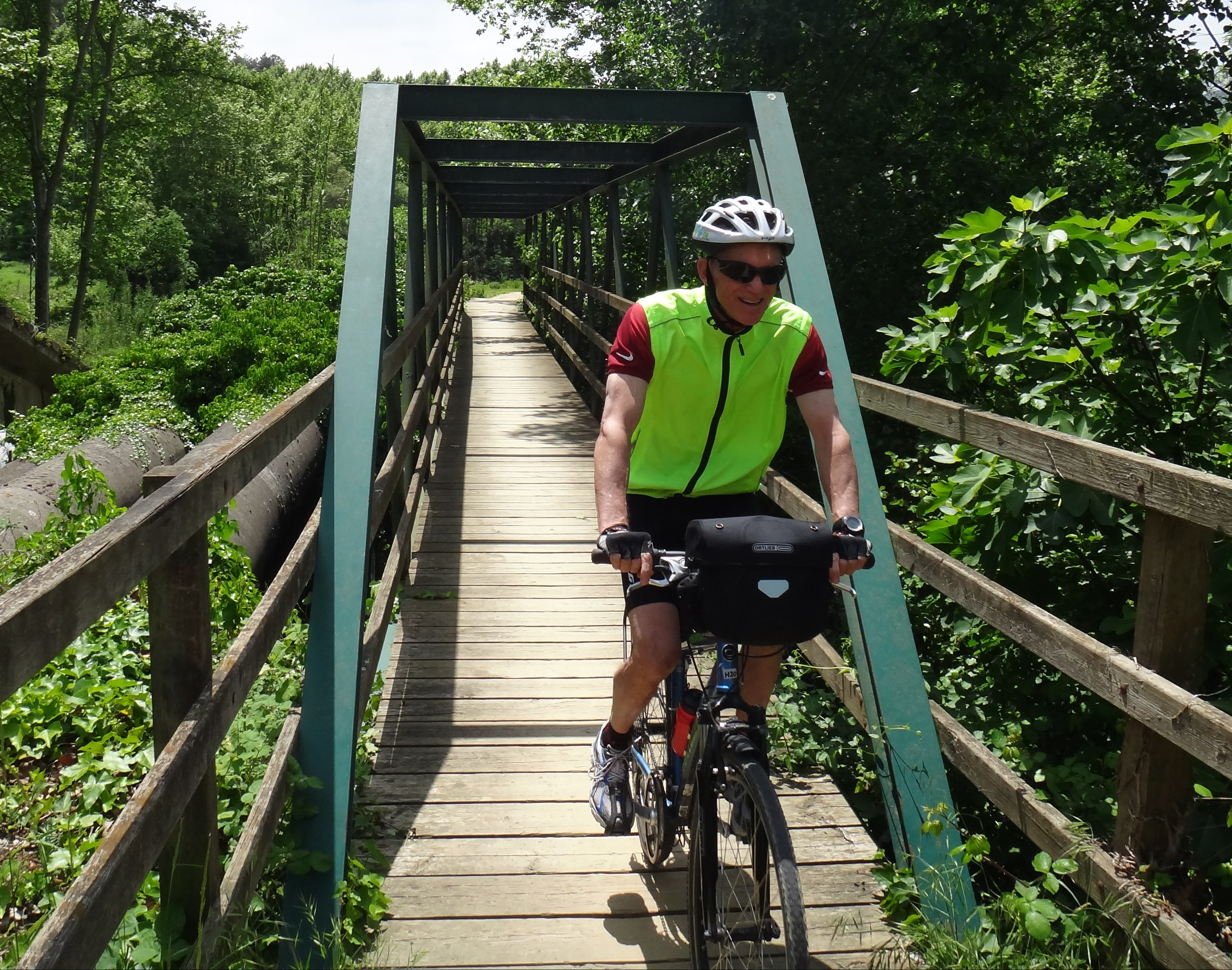
This was a previous bike trip in Spain

the past month I’ve pedaled hundreds of miles–my longest was a 62-mile jaunt last Saturday–and my hip hasn’t caused me even a twinge of pain.

No, the main obstacle is age. It’s harder to whip this 71-year-old body into shape. Hills seem steeper. My average speed is sagging. It’s going to be a long 100 miles at an average of 13 or 14 mph. The 77-mile course looks tempting, but I want to see if I can still do the century.

For inspiration, I volunteered to hand out refreshments to the serious bikers, who are doing the “Dirt Project” Prouty, a 100-mile ride on unpaved, hilly roads in Vermont, the day before my century ride. That day also offers a second 100-mile road bike course, and some serious bikers do two 100-milers over two consecutive days–the Prouty “ultimate.” I didn’t sign up for the ultimate or the dirt course. One century ride would be enough for me.

The basic Prouty century ride pedals up the Connecticut River and loops over Mt. Cube, before returning to the river at Woodsville and returning along the river. Thanks to the river, the hill climbing isn’t as steep or long as in some other bike routes. From previous experience, my best chance of finishing calls for grinding it out–just keeping my butt on the saddle and the legs pumping, hour after hour. In past Proutys I’ve been surprised how far that can take me. The uplift from sharing the route with hundreds of other bikers, some of which I can draft, and the physical and moral support from eight refreshment stations should provide the boost I need.

All you hipsters, wish me luck. This may become a new chapter to my book, “Get Hip! How to Prepare for and Recover from Total Hip Replacement”. See links to it at <www.gethip.info>

Rob Taylor